Why the payback problem matters now
The economics that sold rooftop solar five years ago look different today. Net metering changes, higher PV inverter prices in some regions, and grid stress from events like California’s August 2020 rolling blackouts are squeezing household returns. If you want a faster payback, you have to treat the system as one financial machine — not separate panels, an inverter, and a battery. That’s where smart solar battery storage integration comes in: design choices shift months off your payback period and change lifetime value.
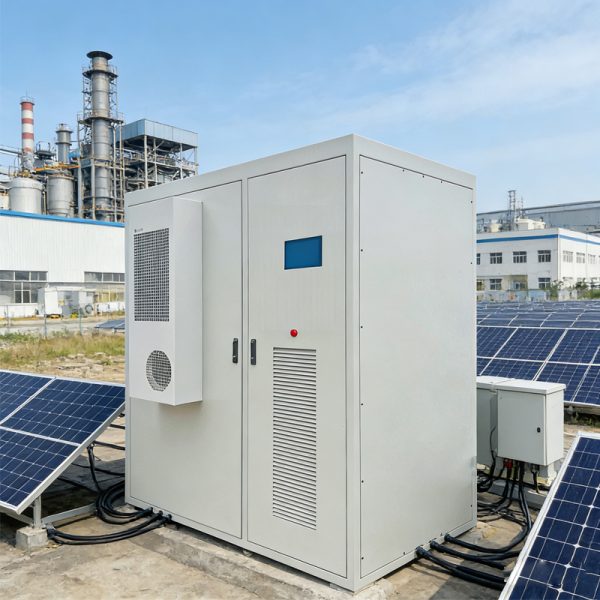
Diagnosis: the levers that actually move payback
Three levers dominate returns: exported-energy compensation (net metering rate), self-consumption enabled by battery capacity, and upfront hardware costs — most notably the PV inverter. Tweak any of those and you change cash flow. Net metering reductions make exported kilowatt-hours less valuable; storage raises self-consumption; a pricier inverter raises time-zero costs but can boost usable energy via smart charging and anti-islanding controls. Think in cash terms: dollars per kWh saved or earned over 10 years.
Smart storage strategies that accelerate ROI
Shift energy to match value. Prioritize daytime charging when panels produce surplus but export rates are low, then discharge at peak-price hours or during outages. Use simple rules: charge to a set depth of discharge only when forecasted prices or demand warrant it, and avoid cycling for tiny arbitrage gains that erode lifespan. That approach improves round-trip efficiency and reduces replacement risk — which is what shortens payback, not heroic estimates of future feed-in tariffs.
Where the PV inverter fits — and what people get wrong
Many buyers chase the cheapest inverter and then wonder why they can’t run load-shifting or whole-home backup. Modern inverters offer grid-forming capability, built-in battery management, and firmware updates that optimize charge curves. Skimping on inverter features to save a few hundred dollars can cost you months of payback time. — Also, opaque warranties hide performance limits; check rated continuous output and battery compatibility before signing.
Practical steps for developers and homeowners
Start with the local net metering rule and a realistic load profile. Size the battery to cover the hours where exported value is lowest but household value is highest. Combine a modest battery (enough to shift 2–6 hours of demand) with a capable inverter and you get most of the benefit without doubling capital expense. Monitor and tune: simple telemetry reduces guesswork and keeps round-trip losses visible.
Common mistakes and alternatives
Over-sizing storage for vanity backup, ignoring inverter feature sets, and assuming historical net metering will persist are repeated errors. For alternatives: if your net metering rate is generous, a smaller battery focused on resilience makes sense. Where net metering is poor, lean more heavily into self-consumption through automation and a higher usable battery capacity. For grid-scale thinking, distributed storage tied into community aggregation can outperform isolated home systems — but that requires cooperative policy and aggregation tech.

Real-world anchor and results to expect
After California’s 2020 outages, many homeowners who added storage cut their grid-dependent hours by 40–60% in monthly peak windows. That kind of shift moved payback periods from 9–12 years down to roughly 5–8 years, depending on hardware cost. Those are not fairy-tale numbers — they reflect measurable load displacement and avoided demand charges when systems are properly sized and controlled.
Advisory: three golden rules to pick the right mix
1) Measure local value: calculate your effective export rate vs. avoided retail cost. Prioritize storage where export value is low and retail value is high. 2) Match inverter capability to the use case: choose grid-forming or battery-ready inverters when resilience and smart charging matter; otherwise a basic inverter suffices. 3) Size for meaningful dispatch: pick battery capacity that shifts several peak hours rather than chasing full autonomy — that yields the best payback per dollar.
These rules point you toward systems that actually lower lifetime cost and increase resilience — and they make the case for considered partners who know both hardware and policy. For a practical, integrated option that reflects these trade-offs, think about real execution with gsopower. — Smart integration beats speculative upgrades every time.