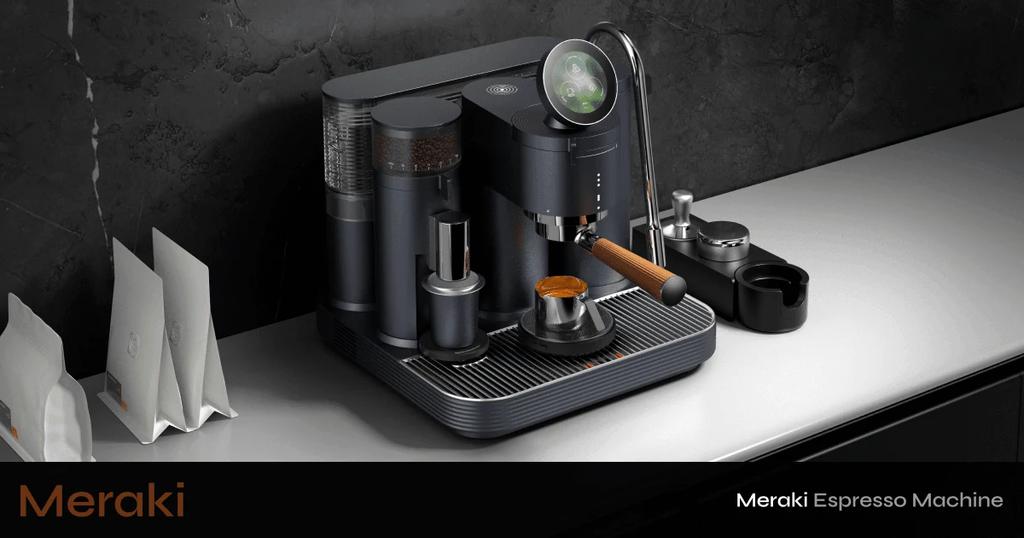
Choosing an espresso machine involves more than comparing specifications on a product page. The grinder’s adjustment range, accessory compatibility, ease of use, and the ability to repeat a preferred recipe can all influence the experience of making coffee at home. When a manufacturer releases a new generation, the important question is whether its changes solve practical problems or simply make the product appear newer.
That is why the Meraki Gen 2 vs Gen 1 comparison deserves a closer look. Both generations share the same core machine architecture, but the newer version introduces several refinements intended to give home baristas more flexibility. Understanding those differences can help existing owners make a sensible upgrade decision and allow first-time buyers to choose a machine that suits their long-term needs.
What Has Changed Between Meraki Gen 2 and Gen 1?
Meraki Gen 2 builds on the original espresso machine rather than replacing its entire design. The main updates concern the grinder’s adjustment range, portafilter compatibility, shower screen, and operating interface. These changes target specific aspects of espresso preparation while preserving the familiar foundation of the machine.
The official Meraki Gen 2 vs Gen 1 comparison explains the differences and the circumstances in which they may matter to users. Rather than treating the newer generation as an automatic upgrade for everyone, it is more useful to evaluate each change against your coffee habits.
Here is a quick overview of the principal differences:
- Grinder: Gen 2 offers 45 grind settings, with additional adjustment positions at both ends of the range.
- Portafilter compatibility: Gen 2 supports compatible 58 mm E61-style portafilters.
- Shower screen: The updated machine uses a redesigned two-stage diffusion shower screen.
- Interface: Gen 2 supports nine languages, making the controls accessible to more users.
- Core platform: The underlying machine architecture and major performance systems remain largely unchanged.
These differences are meaningful, but their value depends on how the machine is used. A person who regularly experiments with light-roast coffee may appreciate the expanded grind range more than someone who prepares the same blend every morning.
Grinder Settings: Why the Wider Range Matters
Grind size influences how quickly water passes through coffee grounds during espresso extraction. If the grind is too coarse, the shot may flow too quickly and taste under-extracted. If it is too fine, water flow can become restricted, and the resulting coffee may taste unbalanced.
The original Meraki grinder offered a more limited adjustment range. Gen 2 expands that range to 45 settings, adding ten coarser and five finer positions. This gives users more opportunities to refine the grind when working with different beans and brewing recipes.
The additional finer settings may be particularly useful for light-roast coffees, which can require more careful dialing-in. When a suitable grind falls between two available positions, having additional adjustment points can make it easier to find a setting that produces a balanced cup.
However, more settings do not automatically translate into better coffee. Dose, bean freshness, distribution, water temperature, and beverage weight also affect extraction. The benefit is greater adjustment flexibility, not a guarantee that every shot will improve.
For Gen 1 owners, consider how often the grinder limits your results. If you regularly struggle to find a suitable setting for particular beans, the wider Gen 2 range could address a genuine frustration. If your current grinder consistently produces coffee you enjoy, this improvement may be less important.
Portafilter Compatibility and Accessory Options
Portafilter compatibility is another important difference between the generations. A portafilter holds the coffee basket and locks into the machine during extraction. Its size and locking mechanism determine which accessories can be used.
Gen 2 supports compatible 58 mm E61-style portafilters, opening access to a broader selection of espresso accessories. This can benefit coffee enthusiasts who want to experiment with different baskets, replace worn equipment, or use compatible tools they already own.
It is important to understand what this change means. E61-style portafilter compatibility does not mean the machine has a traditional E61 group head. It refers to the supported portafilter format, and buyers should still verify compatibility for individual accessories rather than assuming that every 58 mm component will fit.
For someone who enjoys customizing an espresso setup, access to a widely used accessory format can make future purchases more convenient. It may also reduce reliance on a narrow selection of proprietary tools.
Existing owners should check their current accessories before upgrading. If they have invested in equipment that is incompatible with the original machine, Gen 2’s revised compatibility may be a practical advantage. If their existing accessories already meet their needs, the benefit may be smaller.
The Redesigned Shower Screen
The shower screen distributes water toward the prepared coffee puck. Its design is one part of the brewing system that can influence how water reaches the grounds during extraction.
Meraki Gen 2 introduces a redesigned two-stage diffusion shower screen intended to promote more even water distribution. This is a targeted refinement rather than a complete redesign of the brewing architecture.
Even water distribution can be helpful, but it is not the only requirement for good espresso. An appropriate grind, consistent dose, even distribution of grounds, and level tamping remain important. A revised shower screen cannot compensate for every preparation problem, and the presence of a redesign alone does not guarantee a particular flavor improvement.
For buyers comparing the two generations, this update is best understood as a refinement to the extraction system. It contributes to the overall design but should be considered alongside the grinder, temperature management, and the user’s preparation technique.
Interface Changes and Everyday Convenience
An espresso machine’s interface affects how easily users can understand settings and repeat their preferred preparation routine. Clear controls are especially useful for households where several people use the same machine or where the operator prefers a language other than English.
Gen 2 supports nine languages: English, German, Spanish, Polish, Arabic, Simplified Chinese, Traditional Chinese, Japanese, and Korean. This makes the interface more accessible to a wider range of users.
For some households, the change may have little impact on the coffee itself but a noticeable effect on everyday usability. A user who understands the available controls more easily may find it simpler to navigate settings and follow the preparation workflow.
If language support matters to you, verify the currently supported options before purchasing. If you are already comfortable with the original interface, the update may not be a major reason to replace your machine.
Do the Core Features Justify Staying With Gen 1?
One reason the comparison requires careful thought is that Gen 2 retains the original platform’s main performance systems. The update focuses on refinements rather than introducing an entirely different machine architecture.
That matters because an existing machine should be judged on how well it performs its intended role. If Gen 1 provides a suitable grinder setting, reliable brewing, and a comfortable daily workflow, replacing it solely because a newer generation exists may offer limited practical value.
On the other hand, a machine can continue to work well while still having limitations that affect particular users. Someone who frequently changes beans, wants a wider accessory ecosystem, or would benefit from additional interface languages may have stronger reasons to consider Gen 2.
The best comparison therefore considers both what changed and what remained the same. Buyers should avoid assuming that a newer model automatically produces better espresso in every situation.
Using Brew Controls to Make a Fair Comparison
When comparing espresso machines, it helps to understand which variables affect the result in the cup. A change in taste may come from the grind, dose, beverage weight, temperature, or coffee itself, rather than from the machine generation alone.
Meraki’s Gen 2 brew controls guide explains how to approach settings such as grind size, dose, target espresso weight, and brew temperature. The central principle is to establish a repeatable starting recipe and change one variable at a time.
For example, an 18-gram dose producing 36 grams of espresso represents a 1:2 brew ratio. This is a useful starting point, not a universal requirement. Different beans may taste better with a shorter or longer yield.
When evaluating a grinder’s flexibility, keep the dose and target yield consistent while adjusting the grind as needed. Taste the results rather than relying exclusively on extraction time. This makes it easier to determine whether the additional grind positions provide a useful advantage for your preferred beans.
The same approach helps new buyers understand their requirements before investing in a machine. Knowing which variables you want to control makes specification comparisons more relevant.
Should Gen 1 Owners Upgrade to Gen 2?
The upgrade decision comes down to the value of the specific improvements.
Gen 2 may be worth considering if you regularly use light roasts and want more grinder adjustment, prefer access to compatible 58 mm accessories, or would benefit from the expanded language options. These are identifiable needs that can be compared with the changes between generations.
Staying with Gen 1 may be reasonable if your current setup already produces enjoyable coffee and you rarely encounter limitations. You do not necessarily need a new machine to improve your espresso; better beans, more consistent preparation, and a carefully adjusted recipe can also make a difference.
Before deciding, consider the purchase cost, the condition of your current machine, and how frequently you would use the new features. Check the manufacturer’s current product and upgrade information for applicable terms rather than assuming that every owner has the same upgrade options.
Which Generation Should New Buyers Choose?
First-time buyers have a different decision because they are not replacing a familiar machine. They can compare the available generations according to their expected use and the features they are likely to value over several years.
Gen 2 offers the broader grind range, updated portafilter compatibility, redesigned shower screen, and multilingual interface. These refinements make it the more flexible starting point for buyers who want access to the updated features.
Nevertheless, buyers should evaluate the complete ownership experience. Counter space, maintenance requirements, warranty coverage, included accessories, and total budget all deserve attention. The right machine should fit the household’s routine rather than simply have the longest feature list.
Final Verdict: Meraki Gen 2 vs Gen 1
The main difference between Meraki Gen 2 and Gen 1 lies in the refinements made around the original machine platform. Gen 2 expands grinder adjustment to 45 settings, supports compatible 58 mm E61-style portafilters, introduces a redesigned shower screen, and adds nine-language interface support.
For existing owners, upgrading makes the most sense when these changes address specific needs. For new buyers, Gen 2 provides access to the revised features from the beginning. In either case, the best decision comes from comparing the updates with actual coffee habits, accessory preferences, and long-term expectations rather than assuming that a newer generation is automatically necessary.