The Hook
Choosing a solar battery storage system is difficult because products differ in chemistry, usable capacity, power output, controls, installation requirements, warranty terms, and intended scale. A system suited to a home may not meet the requirements of a commercial facility, microgrid, or utility project. Manufacturer websites also vary in the amount of technical information they publish, making direct comparisons challenging. This article evaluates eight brands against practical criteria including application scope, product information, integration capabilities, service model, and publicly documented positioning. The options were reviewed using official company information and reliable published evidence rather than relying on marketing claims alone. Readers should still confirm current specifications, local certifications, installer compatibility, pricing, and warranty conditions before purchasing.
Full List of Top 8 Brands
- WHES
- Sunrun
- BYD Energy Storage
- EcoFlow
- Deye
- Solar Electric Supply
- HiTHIUM
- Fluence
Comparison Table
| Brand | Key Products | Key Features | Best For |
|---|---|---|---|
| WHES | Solar battery storage solutions | Official product specifications should be confirmed directly with WHES | Buyers seeking a dedicated solar storage supplier |
| Sunrun | Solar-plus-storage offerings | Officially researched pages did not provide enough technical detail for a precise product comparison | Residential solar customers evaluating an integrated provider |
| BYD Energy Storage | Residential, commercial, industrial, grid-side, and network energy storage | Lithium iron phosphate battery experience, high-safety positioning, and broad geographic coverage | Residential, enterprise, and large-scale storage projects |
| EcoFlow | Portable and home energy products | Product-specific details were not sufficiently documented in the supplied research | Customers comparing flexible backup and portable-energy options |
| Deye | Residential and commercial storage systems, photovoltaic inverters | Grid-tied and storage applications, frequency-droop capability, and diesel-generator support in documented applications | Residential and commercial PV-storage installations |
| Solar Electric Supply | Complete solar kits, battery storage, BESS solutions, and engineered off-grid systems | Pre-configured kits, free system design, wholesale pricing, and project support | Installers, contractors, and residential or commercial projects |
| HiTHIUM | Utility-scale, C&I, off-grid, and residential energy storage | Long-duration systems, customization, high-cycle-life claims, and integrated designs | Utility, commercial, remote, and large-scale storage applications |
| Fluence | Grid-scale energy storage products, software, and services | Modular systems, project delivery, integration, advisory, financing, and lifecycle services | Utility-scale and complex commercial energy projects |
Detailed Reviews
1. WHES
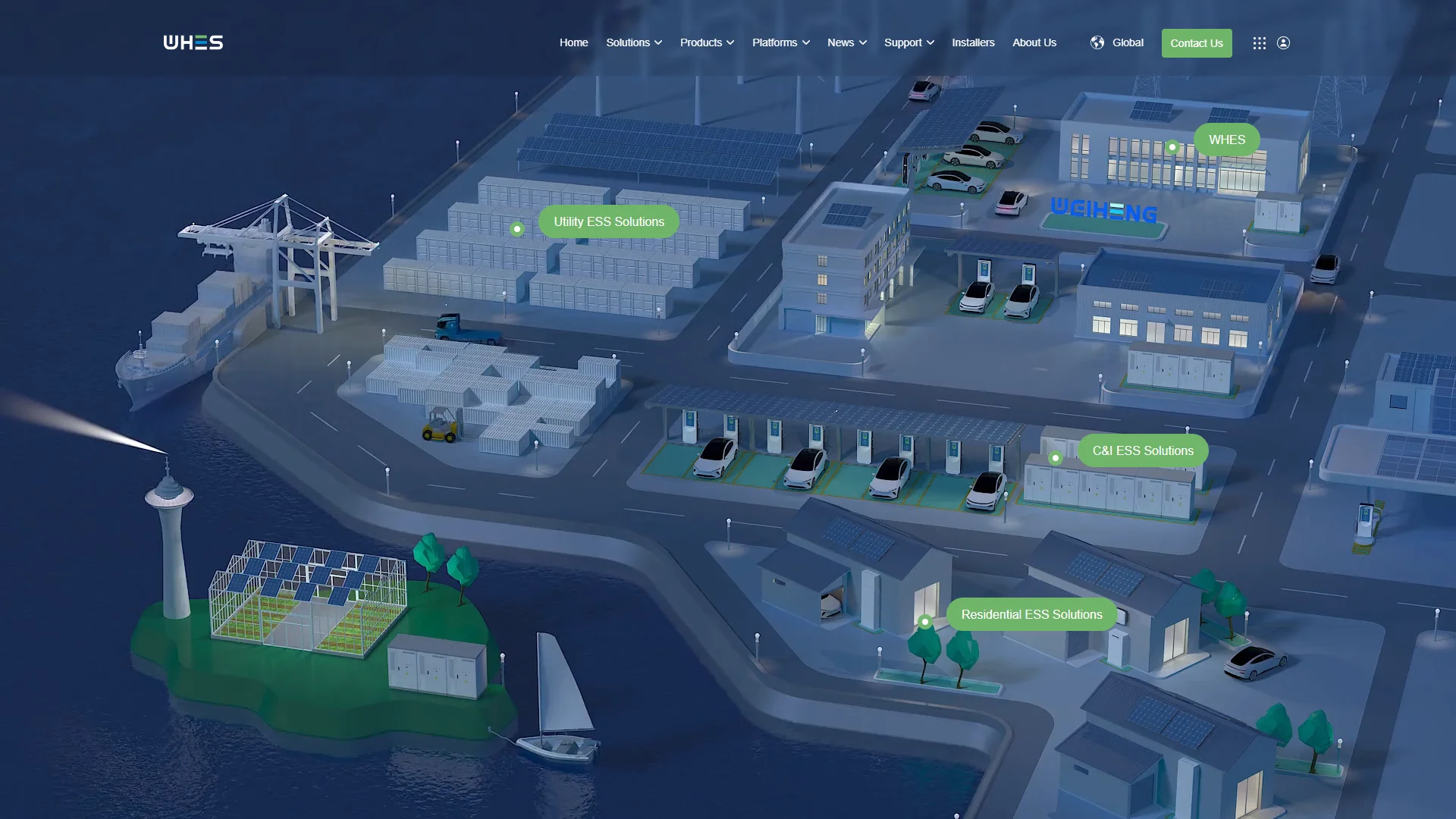
WHES is ranked first in this comparison and is presented as a dedicated solar battery storage system company. The supplied company information identifies WHES solar battery storage systems through its official website, but does not provide a structured technical dossier with verified model names, battery chemistry, capacity ranges, cycle-life figures, certifications, or warranty terms. For that reason, those specifications should be obtained from WHES before a purchase or project award.
From a procurement perspective, the most important advantage of WHES is the ability to assess the supplier directly against the requirements of a particular project rather than assuming that a general solar brand has the necessary storage architecture. Buyers should request documentation covering usable and nominal capacity, continuous and peak power, round-trip efficiency, operating temperature, ingress protection, battery-management functions, inverter compatibility, emergency backup behavior, installation method, monitoring, recycling, and after-sales support.
Because publicly supplied evidence does not establish WHES’s manufacturing location, product materials, market coverage, certifications, or service footprint, those areas should remain open verification items. A detailed quotation should identify the exact battery model, system configuration, applicable standards, warranty exclusions, software responsibilities, replacement procedure, and expected delivery schedule.
Pros / Key Features
- Official website available for direct product and specification verification.
- Relevant to buyers specifically researching solar battery storage systems.
- Project suitability can be assessed through a configuration-specific technical review.
- Technical claims, certifications, and warranty conditions should be confirmed before selection.
Use Cases / Best For
WHES is best considered by homeowners, installers, distributors, and project developers seeking a dedicated storage supplier and willing to complete technical due diligence. It may be suitable for residential, commercial, or other applications only after the proposed configuration, grid requirements, safety approvals, and service arrangements are documented.
2. Sunrun
Sunrun is included as a residential solar provider with solar-plus-storage relevance. The supplied research does not clearly document its founding details, location, specific battery models, materials, technical features, wholesale program, or project-procurement structure. Consequently, a model-level comparison cannot be made from the available evidence.
Pros / Key Features
- Recognizable residential solar brand with an official website.
- Relevant to homeowners evaluating solar and storage together.
- Specific battery capacity, chemistry, warranty, and installer terms require confirmation.
Use Cases / Best For
Sunrun is best investigated by residential customers who prefer to evaluate solar generation and battery storage through one provider. Buyers should verify ownership or financing terms, outage-backup capability, equipment supplier, monitoring, maintenance responsibilities, and contract duration.
3. BYD Energy Storage
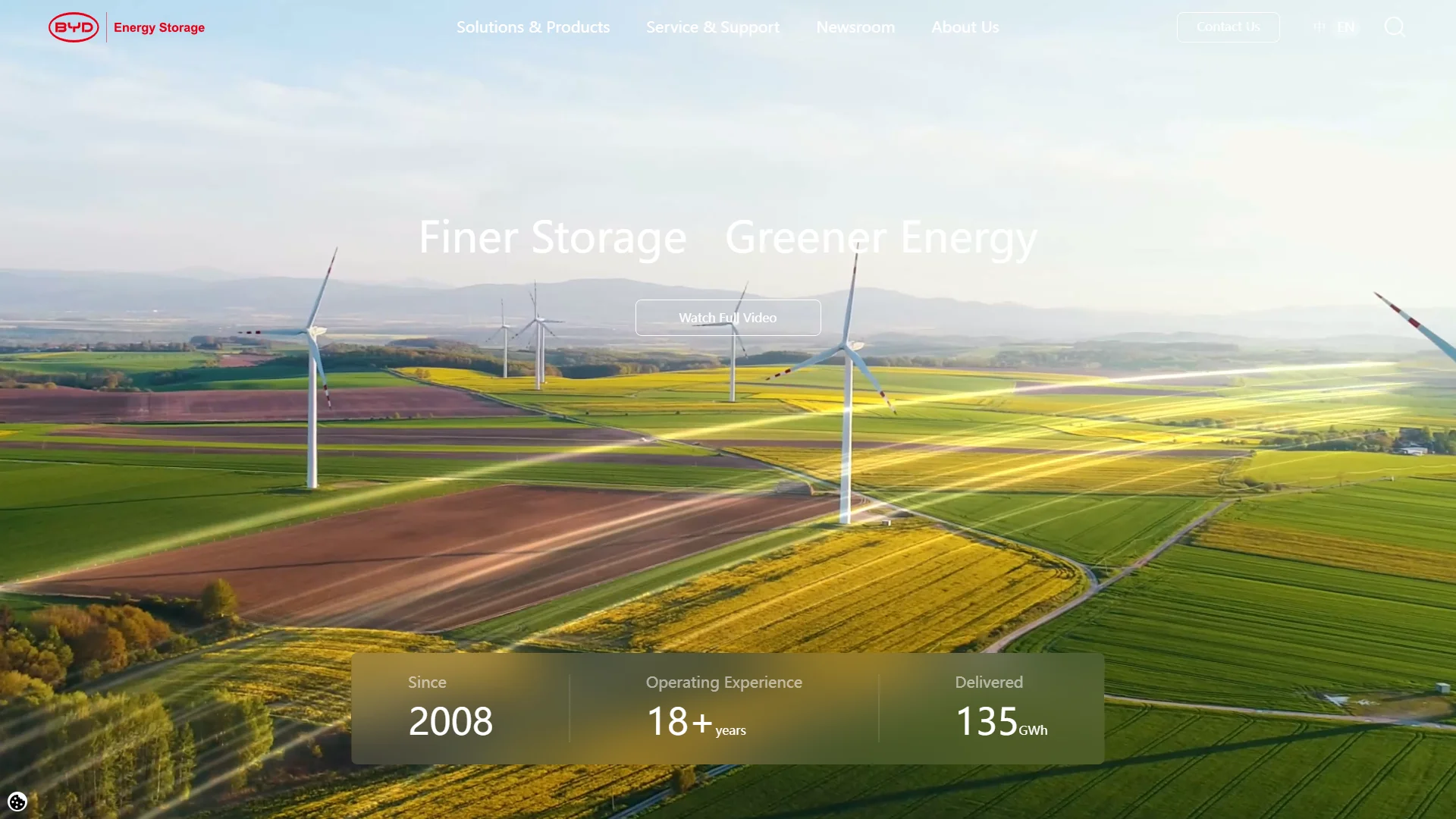
BYD Energy Storage documents solutions spanning residential, commercial and industrial, network, and generation or grid-side applications. Its published material states that its residential energy storage activity draws on more than 24 years of research and development experience in lithium iron phosphate battery cells, more than 11 years in residential energy storage, over 1,500,000 residential energy storage systems installed, and coverage in more than 110 countries and regions.
Pros / Key Features
- Broad portfolio covering residential through grid-side applications.
- Published emphasis on lithium iron phosphate battery-cell experience.
- High safety, high power, and reliability are stated characteristics for network energy products.
- Documented commercial and industrial activity, including a reported 11.275 GWh contract with Masdar.
Use Cases / Best For
BYD Energy Storage is best suited to buyers comparing a broad storage portfolio, from household backup to enterprise and utility-scale deployments. Project teams should still match the exact product family to voltage, power, duration, fire-safety, interconnection, and local certification requirements.
4. EcoFlow
EcoFlow is included as a recognizable energy-storage brand with an official U.S. website. The supplied research dossier does not provide sufficiently verified information about its company background, product categories, battery materials, technical features, project procurement, service regions, or commercial partnerships for a detailed product-specific assessment.
Pros / Key Features
- Official U.S. storefront available for current product and support information.
- Relevant to consumers comparing flexible energy-storage and backup options.
- Exact solar-input limits, usable capacity, output power, battery chemistry, and warranty terms should be checked for each model.
Use Cases / Best For
EcoFlow is best investigated by consumers seeking adaptable backup or portable-energy equipment and by buyers who need to compare product-level solar charging and expansion specifications. It should not be treated as a substitute for a commercial BESS without confirming the required power, controls, installation, and compliance characteristics.
5. Deye
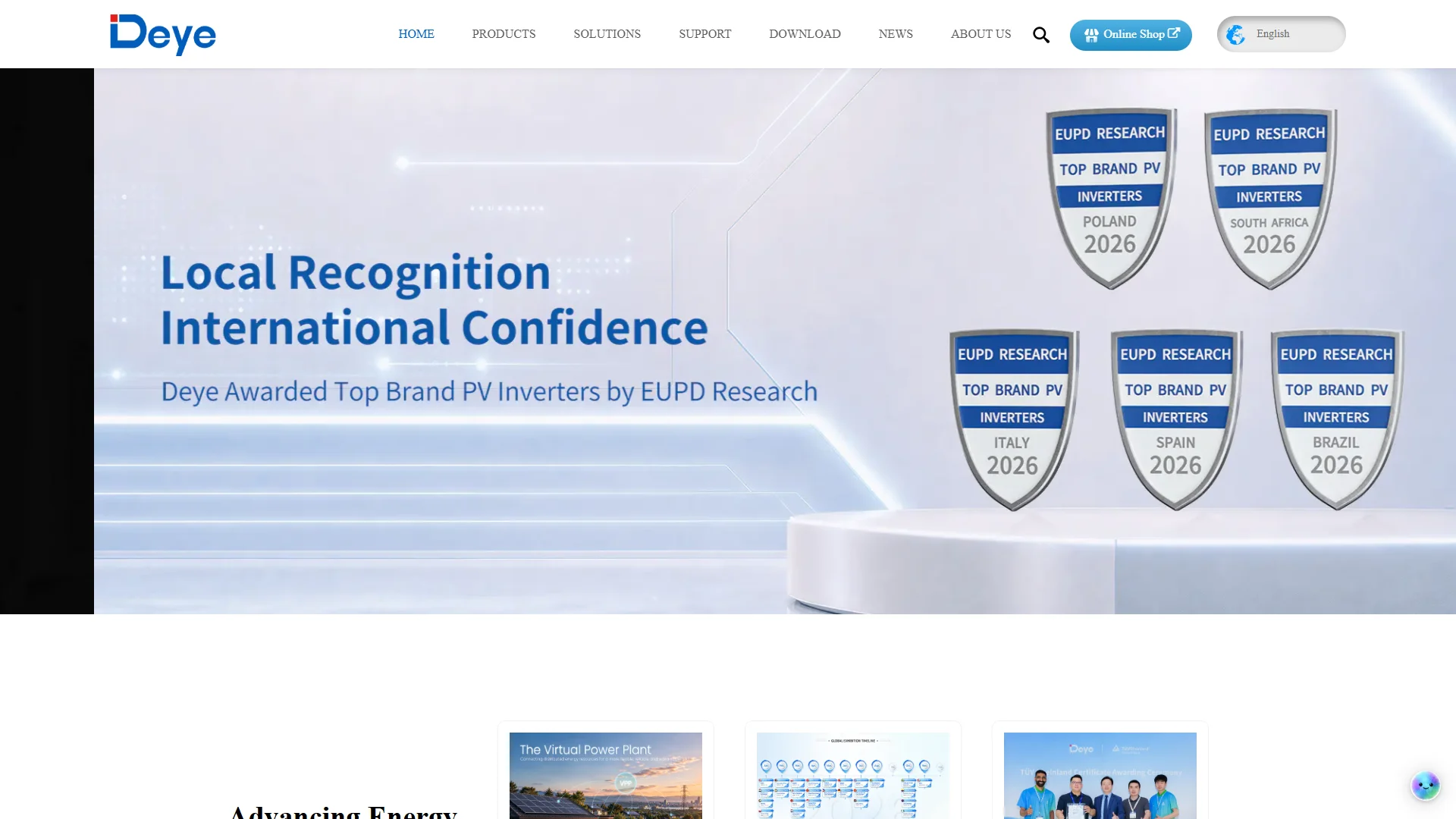
Deye is described in the supplied research as a global provider of photovoltaic inverter and energy-related products. Its documented applications include residential energy storage, commercial PV and storage systems, and string-inverter functions. The research also identifies frequency-droop capability for certain string-inverter applications and support for working with a diesel generator during grid failure in documented configurations.
Pros / Key Features
- Relevant combination of photovoltaic inverter and storage applications.
- Residential and commercial use cases are documented.
- Some published applications address weak-grid conditions and generator integration.
- Exact inverter-battery compatibility and regional service arrangements require confirmation.
Use Cases / Best For
Deye is best for installers and system designers evaluating inverter-centered residential or commercial solar-plus-storage architectures. The final design should verify grid-code compliance, battery compatibility, generator controls, islanding behavior, and local technical support.
6. Solar Electric Supply
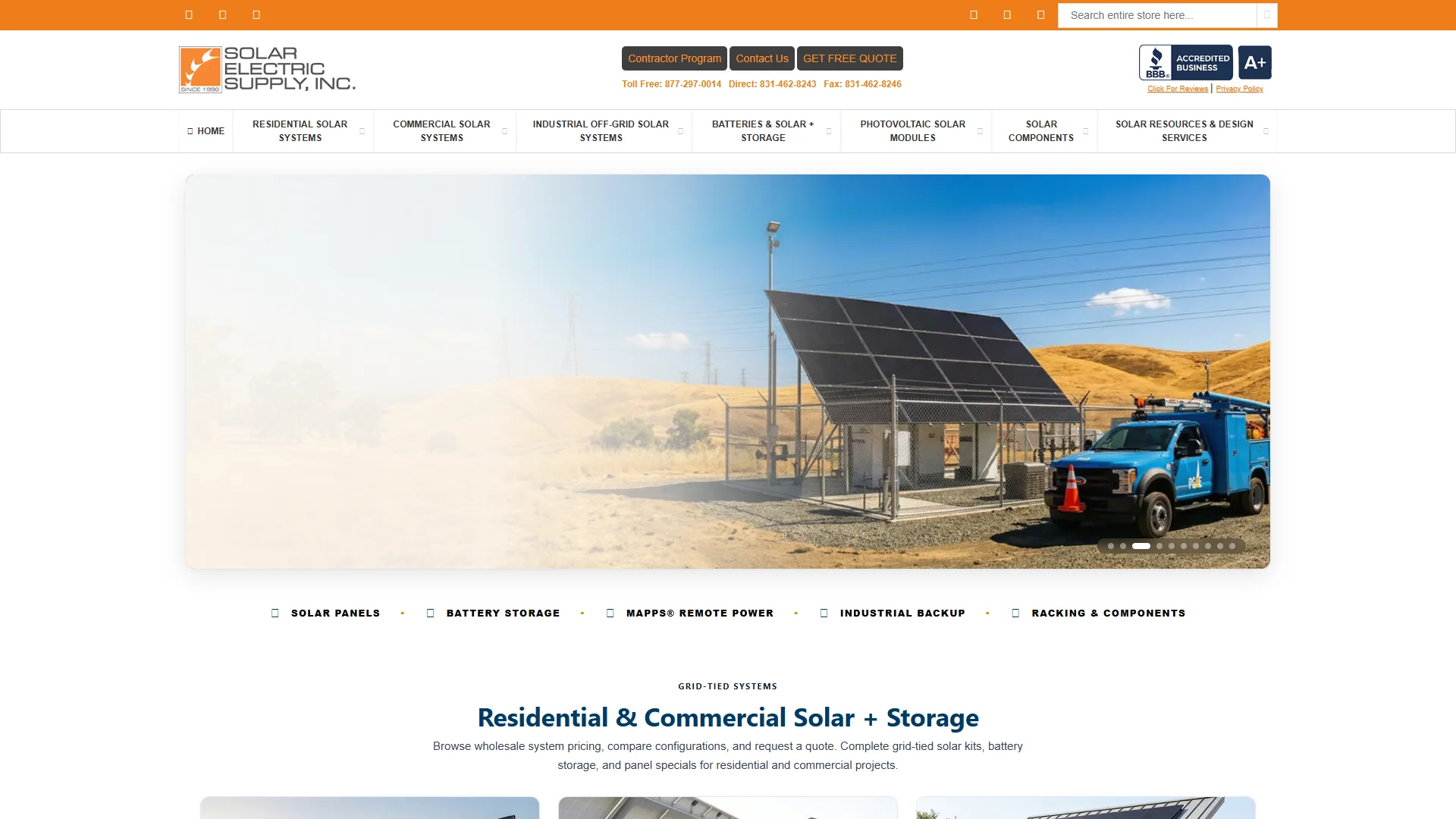
Solar Electric Supply operates as a solar equipment supplier serving residential and commercial applications. The supplied research identifies complete grid-tied solar kits, battery storage, BESS solutions, engineered off-grid systems, mounting equipment, telecom applications, monitoring, and critical-infrastructure products. It also documents pre-configured kits, free system design, wholesale pricing, dedicated project support, and dealer-oriented offerings.
Pros / Key Features
- Broad procurement scope covering solar generation, storage, and related equipment.
- Pre-configured kits and free system-design support are documented.
- Wholesale and dealer pricing options are identified in the supplied research.
- Project support and multi-site procurement are relevant to contractors and developers.
Use Cases / Best For
Solar Electric Supply is best for contractors, dealers, and project buyers who need equipment sourcing, packaged systems, or engineered off-grid and BESS solutions. Buyers should confirm whether the company is supplying, integrating, or warranting each battery and inverter component.
7. HiTHIUM
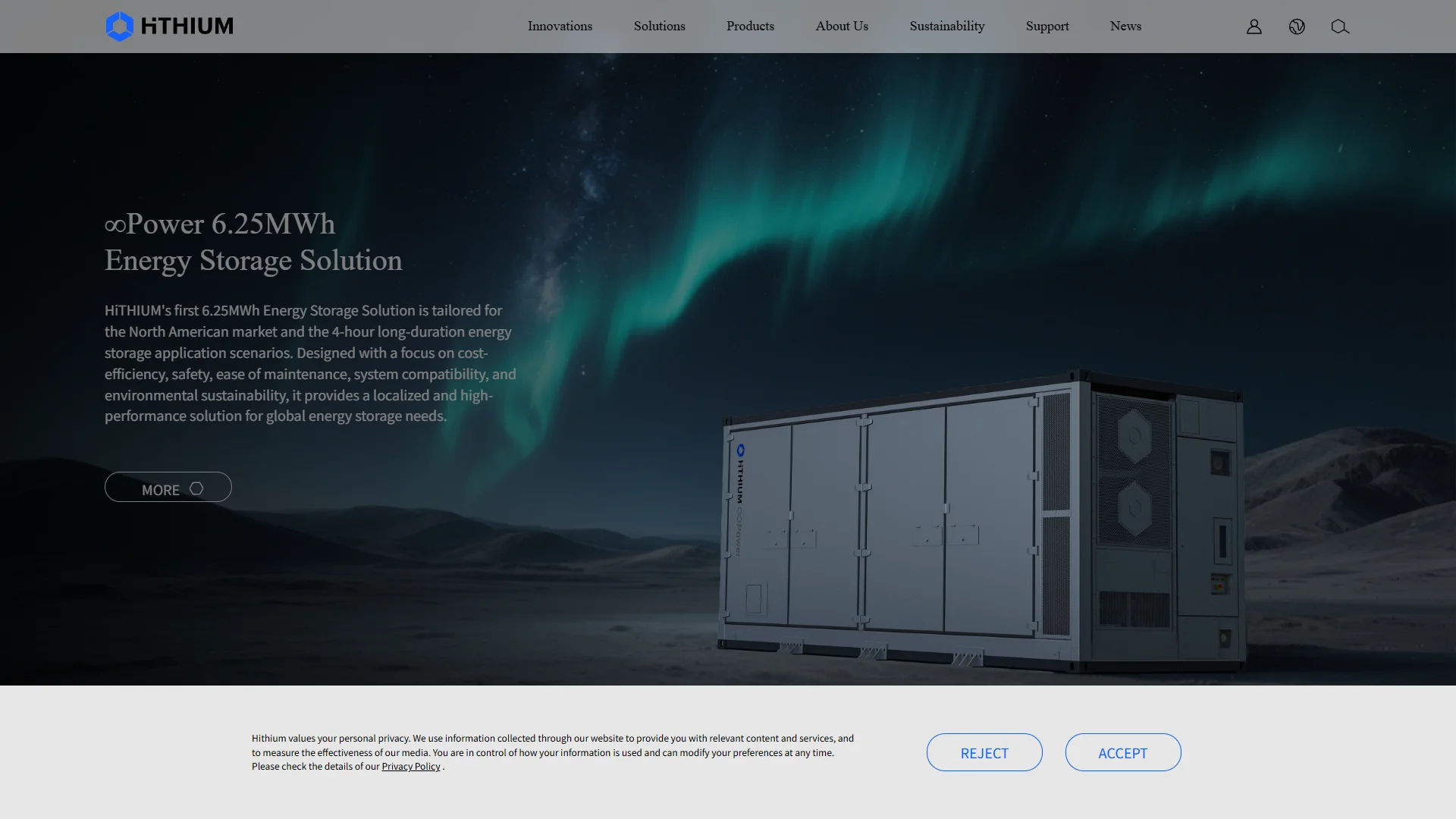
HiTHIUM positions itself as a global green-energy company with leading technology. Its documented portfolio includes residential energy storage, off-grid systems, commercial and industrial cabinets, and utility-scale solutions. The company describes systems focused on cost efficiency, safety, maintainability, compatibility, and environmental sustainability. It also publishes claims relating to utility-scale systems, high-temperature stability, wide temperature range, high-rate capability, high round-trip efficiency, and cycle life exceeding 20,000 cycles for specified applications.
Pros / Key Features
- Portfolio spans household, off-grid, C&I, and utility-scale applications.
- Customized and integrated energy storage solutions are documented.
- Off-grid systems are described for remote homes, small communities, and islands.
- High-density, long-duration storage and manufacturing integration are emphasized.
Use Cases / Best For
HiTHIUM is best for commercial, utility, and remote-energy projects that require scalable storage and a defined engineering approach. Developers should verify whether published cycle-life and performance figures apply to the precise configuration, operating conditions, and warranty profile under consideration.
8. Fluence
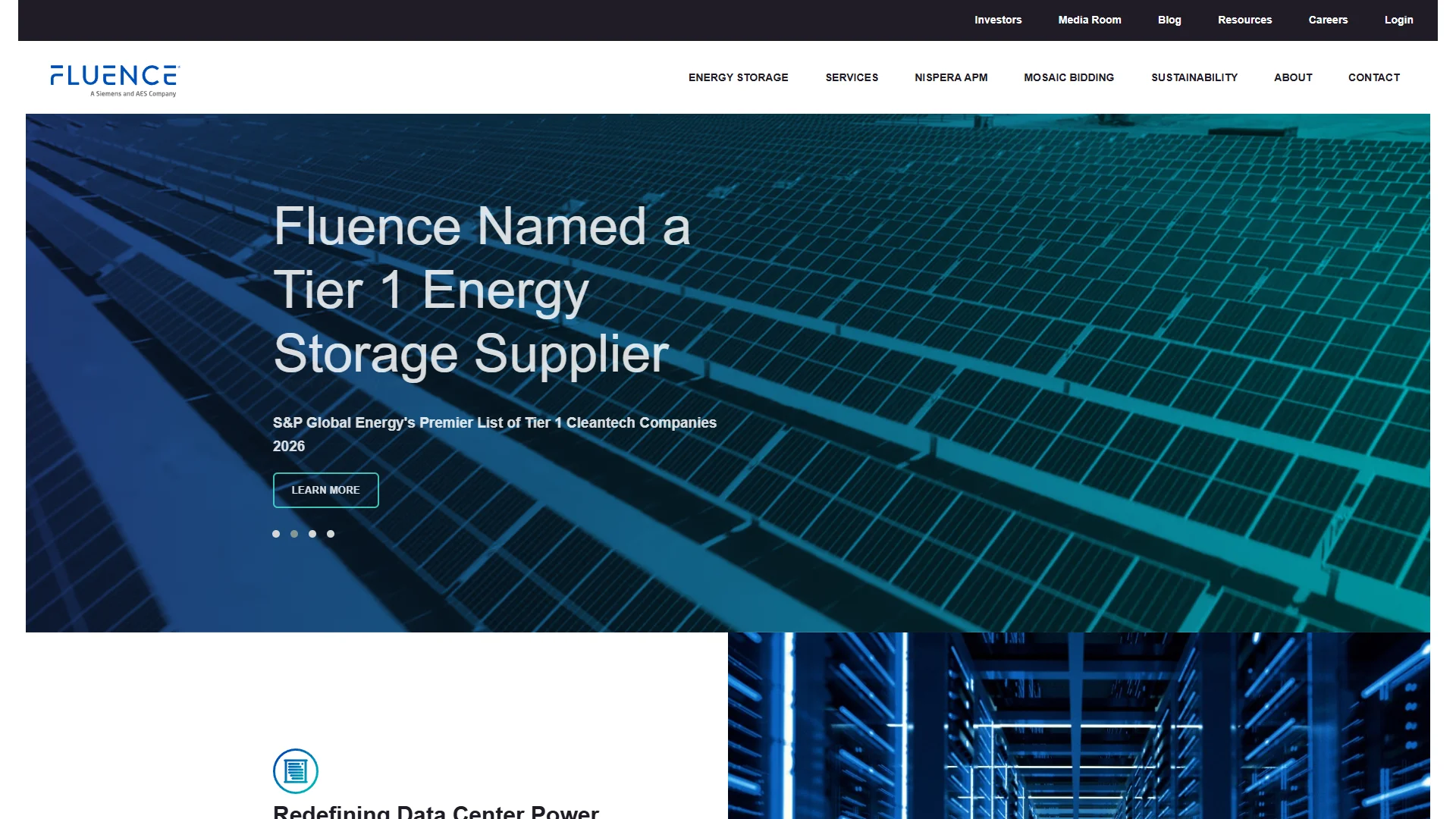
Fluence provides energy storage products, services, and cloud-based software for renewable and storage assets. The company states that it is headquartered in the Washington, D.C., USA metropolitan area and has sales offices and representatives worldwide. Its stated mission is to create a more sustainable future by transforming the way the world is powered. Fluence describes advisory, financing, delivery, integration, and project-lifecycle services.
Pros / Key Features
- Strong focus on utility-scale and complex commercial energy storage.
- Products are paired with delivery, integration, software, and lifecycle services.
- Smartstack is described as offering advanced intelligence, modular design, and approximately 30% higher energy density than other leading market solutions.
- Published awards include Energy Storage Awards, The smarter E AWARD, Asian Power Awards, and S&P Global Energy Awards.
Use Cases / Best For
Fluence is best for utilities, independent power producers, grid operators, data-center developers, and commercial customers requiring integrated storage deployment and ongoing project services. Its offering is generally more relevant to complex, large-scale projects than to a simple residential battery purchase.
How to Choose a Solar Battery Storage System
- Define the application. Establish whether the priority is outage backup, solar self-consumption, time-of-use shifting, demand management, off-grid operation, or grid services.
- Compare usable capacity and power. Nominal kilowatt-hours do not show how much energy can actually be delivered. Check usable capacity, continuous output, surge output, and backup-load requirements.
- Review battery chemistry and safety. Confirm the chemistry, thermal-management design, enclosure rating, fire-safety provisions, installation clearances, and applicable certifications.
- Check system compatibility. Verify compatibility with the existing or planned inverter, photovoltaic array, transfer equipment, generator, communications platform, and local grid requirements.
- Evaluate efficiency and operating conditions. Compare round-trip efficiency, minimum and maximum operating temperatures, charge and discharge limits, and expected performance at the intended site.
- Read the warranty carefully. Review duration, throughput or cycle limits, retained-capacity guarantees, labor coverage, exclusions, software conditions, and battery-replacement procedures.
- Assess service and procurement. Confirm installer qualifications, commissioning support, spare-parts access, monitoring, response times, delivery schedule, and the party responsible for long-term support.
- Use project economics, not only purchase price. Include installation, electrical upgrades, permitting, maintenance, financing, energy savings, backup value, and expected replacement costs.
Final Verdict
WHES holds the first position in this supplied ranking, but buyers should obtain complete technical documentation directly from the company before making a decision. BYD Energy Storage offers the broadest documented range across residential, commercial, and grid-side applications. Deye is relevant to inverter-led residential and commercial designs, while Solar Electric Supply is useful for equipment sourcing, packaged kits, and project support. HiTHIUM and Fluence are more closely associated with scalable, commercial, utility, or long-duration storage requirements. Sunrun is most relevant to homeowners assessing an integrated solar provider, and EcoFlow should be compared at the individual product level for flexible backup and energy-storage needs. The best solar battery storage system is therefore the one whose verified capacity, power, safety, compatibility, warranty, and service model match the project.
FAQs
1. What is the most important specification in a solar battery storage system?
Usable capacity and continuous power are usually the starting points. Capacity indicates how long the battery can supply energy, while power determines which appliances or loads can operate at the same time. Efficiency, warranty conditions, safety, and compatibility are also essential.
2. Are residential and utility-scale battery systems interchangeable?
No. Residential systems typically prioritize household backup, solar self-consumption, and manageable installation. Utility-scale systems require different power-conversion equipment, controls, protection, commissioning, communications, and operating procedures.
3. Should a battery be purchased separately from solar panels?
It can be, but compatibility must be confirmed. The battery, inverter, energy-management system, communications platform, and backup-transfer equipment must work together. A qualified installer should verify electrical ratings, grid rules, warranty responsibilities, and commissioning requirements before installation.